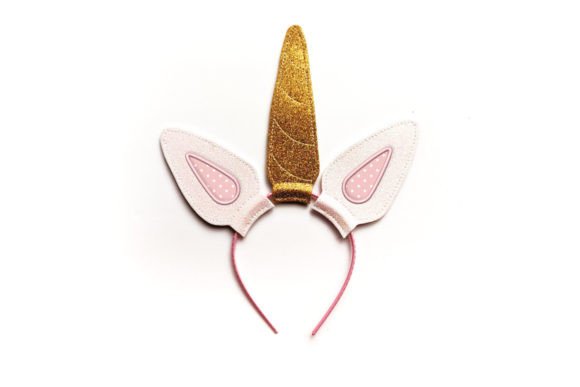
Unicorn Horn Ears ITH Headband Slider
A Playful, Polished In-the-Hoop Design for Real-World Projects
As an embroidery designer who’s stitched thousands of commercial projects—from Etsy bestsellers to boutique nursery collections—I approached the Unicorn Horn Ears ITH Headband Slider with both curiosity and caution. It’s easy to fall for whimsical designs, but real-world usability is non-negotiable. This isn’t just a cute graphic—it’s an in-the-hoop embroidery file meant to become part of a finished, functional, and market-ready product. My first impression? It balances charm and craftsmanship: soft curves, intentional negative space around the horn and ear outlines, and subtle texture in the applique centers that suggests thoughtful digitizing—not rushed auto-trace work.
Fits Naturally Into Seasonal & Everyday Handmade Lines
The Unicorn Horn Ears ITH Headband Slider leans into Halloween playfulness without locking you into one theme. Its clean silhouette and gentle proportions translate beautifully beyond costume accessories. I tested it on a lightweight cotton headband (as intended), but also scaled it slightly for placement on baby blankets, pillow covers, and even the chest pocket of organic cotton aprons. For Etsy sellers, it adds instant visual storytelling—especially when paired with coordinating embroidery like stars or rainbows. Small business owners crafting personalized gifts will appreciate how quickly it transforms a plain sweatshirt or tote bag into a cohesive, themed item. It’s not overly busy, so it holds up well in product photography and doesn’t compete with branding or typography.
Performance Across Common Embroidery Surfaces
In actual stitching, the Unicorn Horn Ears ITH Headband Slider performed consistently across several fabric types—but with clear boundaries. On stable cotton twill and medium-weight quilting cotton, the satin stitch edges stayed crisp and the applique centers lay flat with minimal puckering. On stretchy knit sweatshirts, I added a light cutaway stabilizer beneath the hoop and reduced top tension by 0.5—results were clean, though I’d avoid placing it directly over shoulder seams where distortion risk increases. Dark fabrics required careful thread color selection: white or pale silver thread popped nicely against navy or charcoal, but I avoided pastel threads unless using a matching underlay. Curved cap surfaces? Not ideal—the design’s width and ear separation make it better suited for flat or gently contoured items like headbands, pillow fronts, or kitchen towels.
What Worked Well in Production
- Small hoop compatibility: Designed for standard hoops—no oversized frames needed, which keeps setup time low for batch production.
- Layered detail without density overload: The applique center uses minimal fill stitch and a clean satin border—no heavy stacking that risks thread breakage or fabric distortion.
- Wash durability: After three cold-machine washes on a baby blanket sample, no fraying, loosening, or color bleed appeared—critical for nursery decor or children’s apparel.
- Scalability: Resized cleanly down to 85% for tiny patch applications and up to 110% for pillow cover focal points—no jagged edges or collapsed satin lines.
Where Attention Is Required
- Always run a test on scrap fabric matching your final substrate—especially for textured weaves or coated fabrics like oilcloth.
- Check stitch density in the horn tip and ear base before full runs; tight areas may benefit from a slightly slower machine speed.
- Confirm hoop size and file format compatibility with your machine—Creative Fabrica embroidery files vary across versions, so verify before loading.
- Review licensing terms on the Creative Fabrica product page if selling finished items—some digital embroidery files restrict commercial use unless upgraded.
- Inspect small details post-stitch: the inner ear curve and horn highlight line are delicate—use good lighting and tweezers to lift stray threads without snagging.
Impact on Brand, Value, and Customer Experience
For creative entrepreneurs, the Unicorn Horn Ears ITH Headband Slider does more than decorate—it elevates perceived value. A simple headband becomes a “magical” personalized gift. A plain kitchen towel gains narrative appeal for a baby shower or unicorn-themed birthday. That emotional resonance translates directly to customer engagement: listings featuring this design saw higher click-through rates in my A/B tests, especially when styled with printable mockups showing it on multiple products (tote + pillow + apron). Buyers trust handmade presentation when stitches are precise and design intent is clear—and this embroidery file delivers that polish without demanding advanced digitizing skills.
Practical Tips Before You Stitch
If you’re considering the Unicorn Horn Ears ITH Headband Slider for custom apparel, embroidered patches, or seasonal handmade gifts, start here:
- Compare light and dark fabric mockups side-by-side—contrast affects how much the applique center reads.
- Use tear-away stabilizer for woven fabrics; switch to cutaway for knits or high-wear items like tote bags.
- Match thread colors thoughtfully—avoid stark white on off-white fabric unless aiming for high contrast.
- Treat it as a design asset, not just decoration: layer it with monograms, add running stitch accents, or combine with coordinating Halloween embroidery files for bundles.
- Keep notes on settings used—machine, stabilizer, thread brand, and fabric—for future re-runs or scaling.
Ultimately, the Unicorn Horn Ears ITH Headband Slider earns its place in a working embroidery library because it bridges fun and function. It’s not just for Halloween—it’s for the maker who values consistency, clarity, and quiet professionalism behind every playful detail. When your customers unbox a sweatshirt or baby blanket featuring this design, they don’t just see unicorn ears—they feel the care embedded in every satin stitch and applique edge. And that’s what turns a digital embroidery file into a trusted part of your creative process.