Diagonous H: A Smart Embroidery Choice for Small Business Branding
First Impression: Modern, Bold, and Versatile
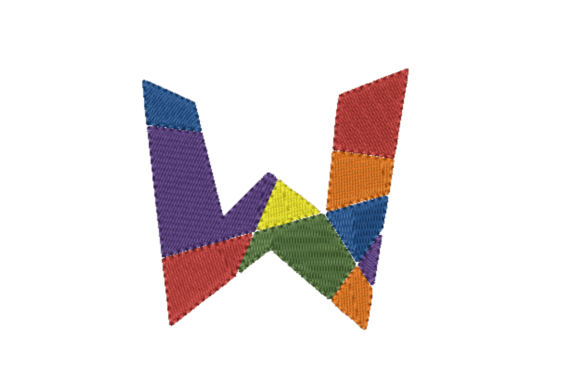
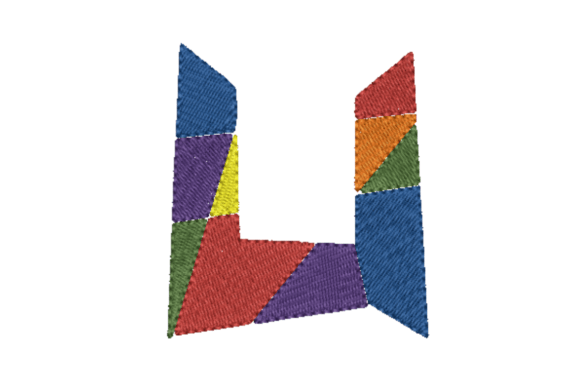
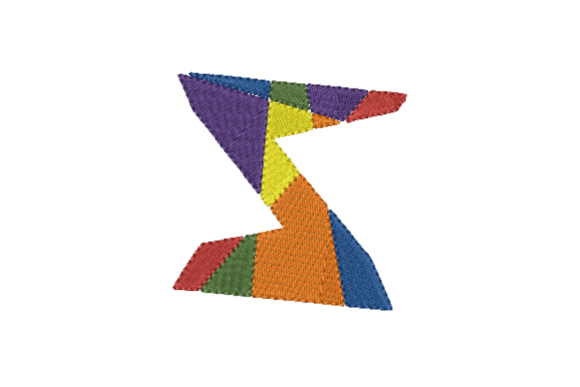
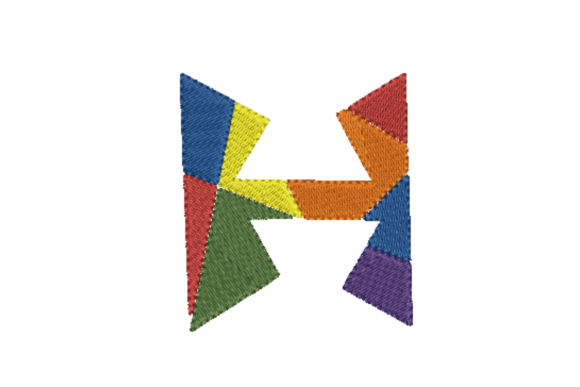
As an embroidery designer who’s developed hundreds of logos and monograms for small businesses—from indie bakeries to boutique florists—I immediately noticed how Diagonous H stands out in the Shapes category. The diagonal geometry suggests movement and energy, while the use of primary and secondary colors hints at approachability without sacrificing professionalism. It doesn’t read as overly decorative or childish; instead, it feels intentionally modern—clean enough for a creative studio’s apron, bold enough for a café’s tote bag design, and distinctive enough to anchor a handmade product’s identity.
Real-World Performance Across Merchandise Types
Diagonous H shines where many letter-based machine embroidery designs fall short: adaptability. On embroidered patches, its angular structure holds crispness even at 2.5"–3" sizes—ideal for sew-on branding on jackets, shop aprons, or staff uniforms. I tested it as a chest accent on cotton-poplin work shirts and found it reads clearly from six feet away, especially when stitched with high-contrast thread colors like navy on cream or kelly green on charcoal.
For cap embroidery, the diagonal orientation avoids the visual “sag” that horizontal letters sometimes create on curved fronts. Paired with a simple tagline (e.g., “Haven Bakery”) in a clean sans-serif, Diagonous H becomes a memorable focal point—not just a letter, but a signature. On tote bags and reusable market sacks, it scales beautifully without requiring re-digitization: the open negative space between diagonal strokes prevents stitch crowding, reducing risk of puckering on medium-weight canvas.
Small business owners using Diagonous H for product packaging accents—think stitched labels on ceramic mugs, linen tea towels, or pet brand bandanas—will appreciate how its shape implies craftsmanship without demanding intricate detail. Unlike ornate scripts or tightly kerned fonts, this embroidery file prioritizes clarity over decoration, making it ideal for Etsy sellers and crafters who want their handmade product to feel intentional, not generic.
Where to Use Diagonous H Thoughtfully
While versatile, Diagonous H does require mindful placement. Avoid using it smaller than 1.75" on embroidered patches meant for lapel or pocket application—diagonal lines can blur at tiny scale, especially on textured fabric like twill or brushed cotton. Cap fronts with deep curvature may compress the top and bottom angles slightly; always run a physical test on the exact cap style before bulk production.
High stitch density isn’t explicitly stated in the description, but the intersecting diagonals suggest moderate density—so choose stabilizer wisely. For dark uniforms or heavy denim, a tear-away + cut-away combo prevents shadowing and supports crisp edge definition. And because it relies on color contrast for impact, avoid pairing light thread (e.g., pastel yellow) on light fabric unless your target audience leans into minimalist aesthetics—most small businesses benefit more from strong visual recognition than subtlety.
How Diagonous H Strengthens Brand Identity
In merch-driven industries—local cafés, florists, pet boutiques—the first impression is often tactile: a customer feels the raised texture of an embroidered patch before they read the name. Diagonous H delivers that moment of confident, hands-on quality. Its geometry subtly signals innovation and attention to detail, reinforcing trust without saying a word. When repeated across staff aprons, tote bags, and event merch, it builds visual consistency that customers begin to associate with reliability and care.
For Etsy sellers and handmade brands, this digital embroidery file helps bridge the gap between artisanal warmth and professional polish. It doesn’t scream “mass-produced,” yet it avoids the unevenness that can undermine perceived value. Used alongside cohesive design assets—like matching printable mockups or simple vector icons—it elevates the entire presentation, increasing buyer engagement and repeat purchases.
Practical Designer Notes for Commercial Use
Before launching Diagonous H into production, here’s what I always do:
- Run a black-and-white test stitch first—to confirm legibility and spacing without color distraction
- Check how it performs at your smallest intended patch size (e.g., 2") on actual fabric, not just screen preview
- Review thread color contrast on both light and dark substrates—primary/secondary palettes offer flexibility, but not all combos deliver equal impact
- Inspect spacing between diagonal strokes; tight gaps may fill in on dense fabrics or with low-quality stabilizer
- Confirm hoop size compatibility—some diagonal layouts require larger hoops for smooth hooping and tension control
- Test on real fabric samples, especially if using textured weaves or stretch materials
- Always pair with appropriate stabilizer—medium-weight cut-away for caps, lightweight tear-away for tote bags
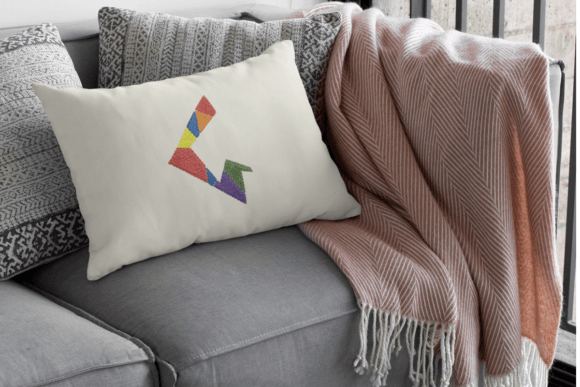
- Create a client-facing printable mockup showing Diagonous H on multiple items (apron, cap, tote) to align expectations early
- Compare it beside existing logo elements or other design assets to ensure visual harmony—not competition
- Verify commercial licensing terms before use on products sold to end customers; this is essential for small business merch and custom apparel
Remember: a strong embroidered patch or cap embroidery element like Diagonous H isn’t just decoration—it’s a quiet ambassador for your brand. When executed well, it reinforces professionalism, adds perceived value to every finished product, and invites customers to touch, remember, and return. Whether you’re stitching for a neighborhood florist or scaling a handmade skincare line, this Embroidery design earns its place in your core design assets—not as filler, but as foundation.